
Frequently Asked Questions
What is the difference between day care, nursery school, and preschool?
Day Care Centers are generally for the purpose of caring for children on an all day basis. Nursery schools are generally experiences in socialization and play. Preschools are oriented toward educational experiences combined with socialization and play.
How is Montessori learning different from other schools?
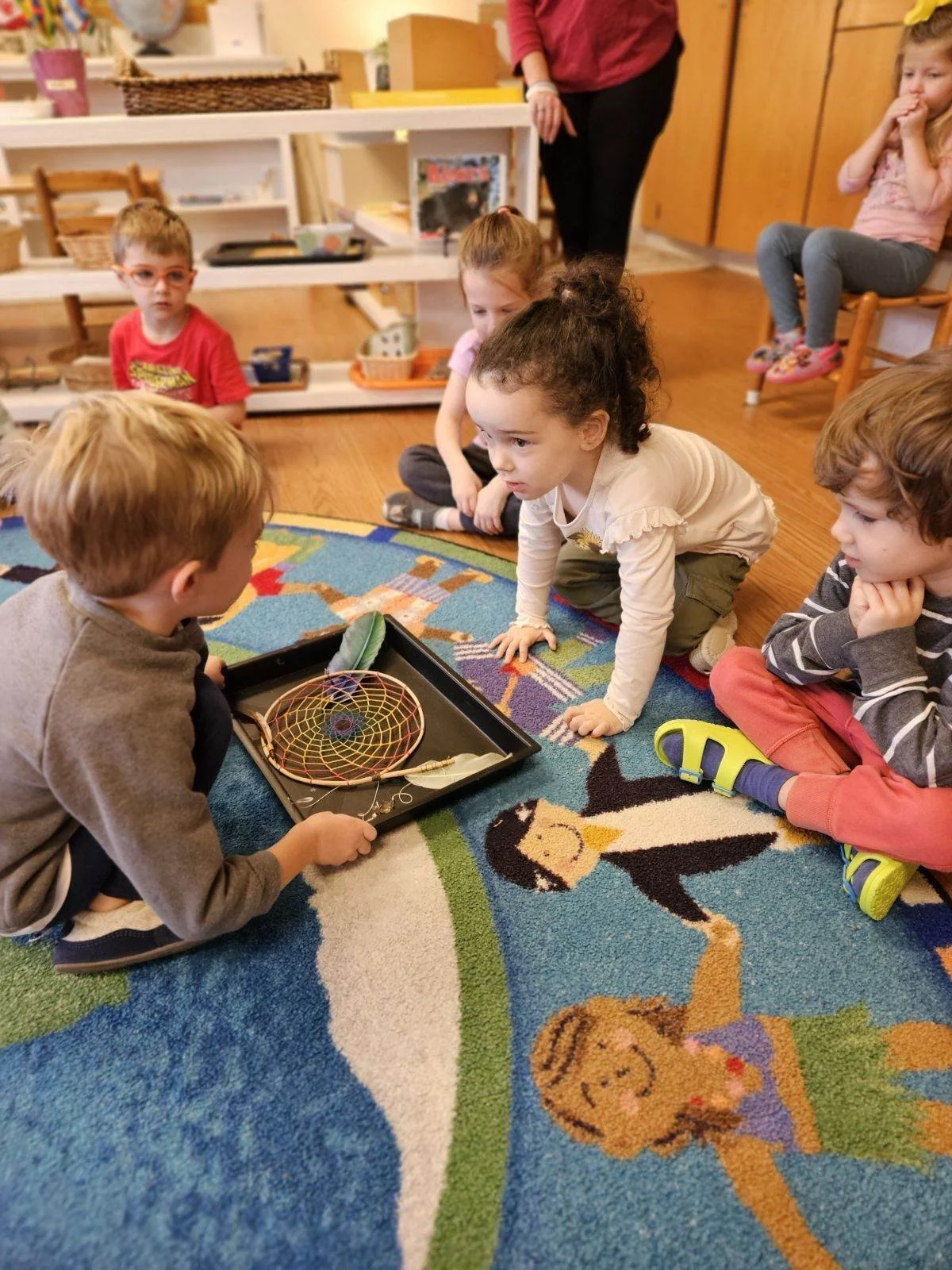
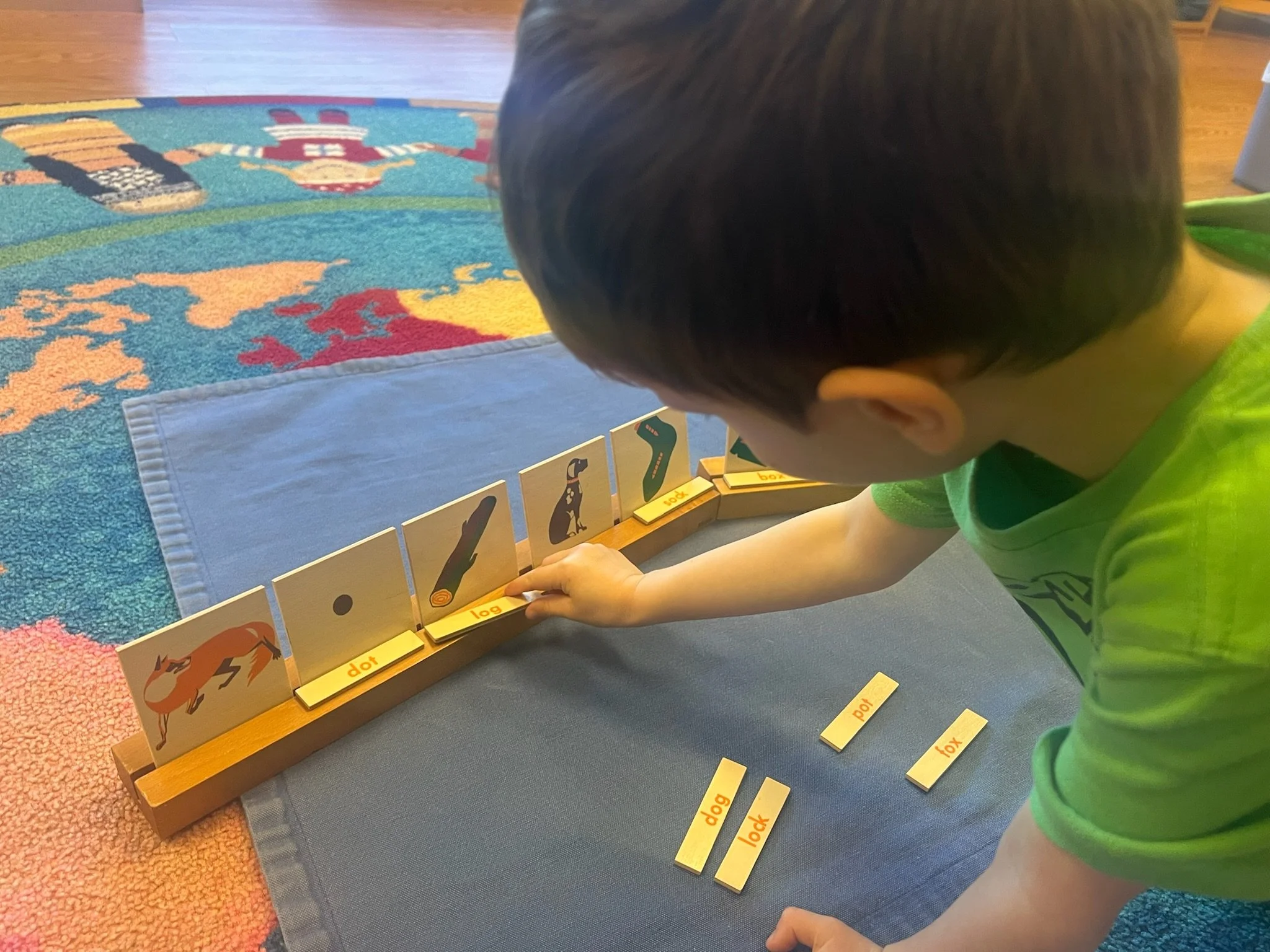
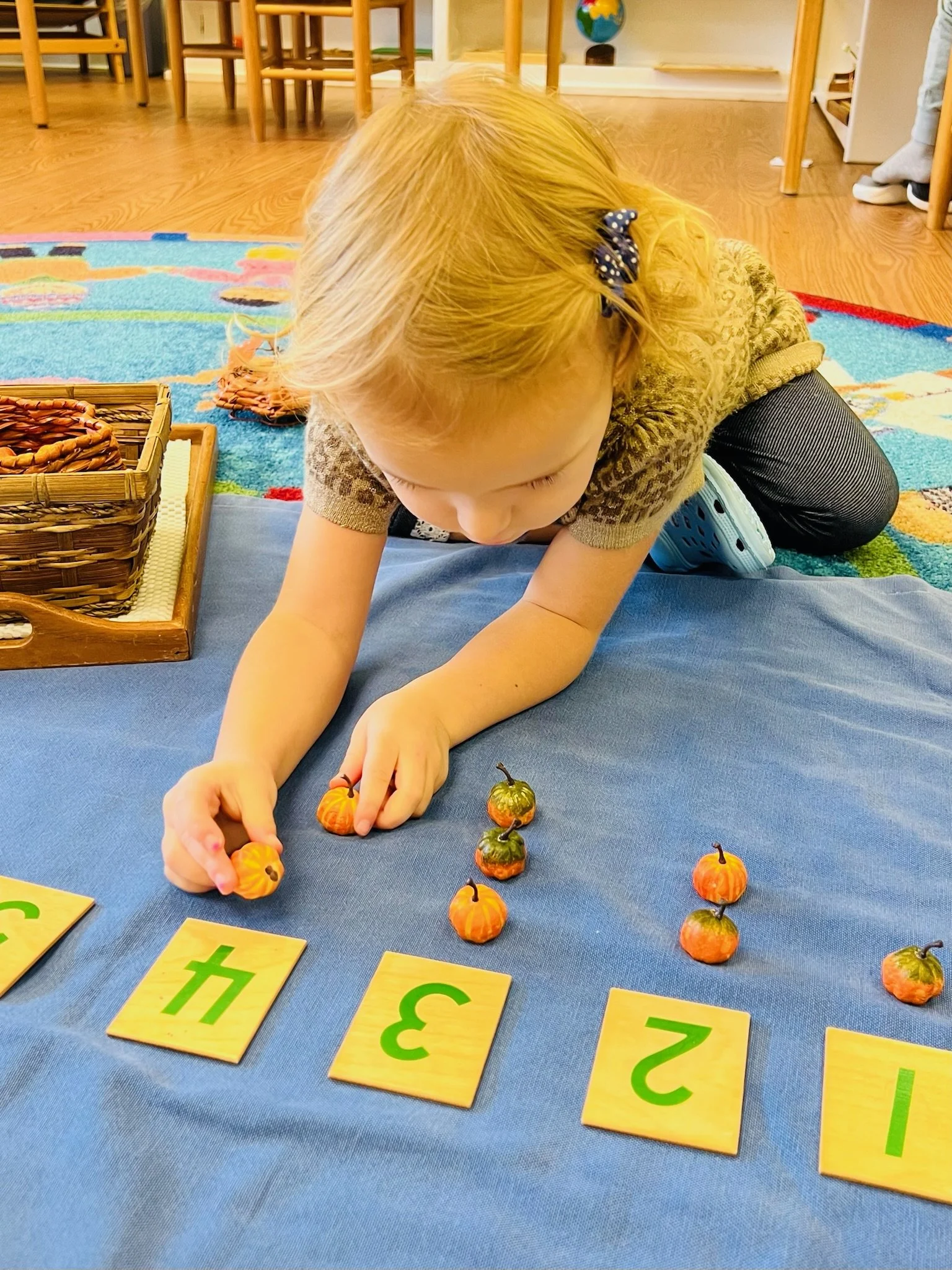
In most educational settings, children are taught in a group with all students learning the same concepts at the same time. In a Montessori classroom, learning is done independently, with each child working at his or her own pace. The teacher (who is called a Guide in the Montessori classroom) closely observes each child to understand his personality, interests and developmental readiness. Lessons are presented to each child based upon these observations, and children are provided with the time and freedom to explore and understand the materials in their own unique way.
What is the Montessori method of education?
The Montessori method of education is basically a unique approach to learning. Rather than “teaching” the child concepts, an environment is designed to stimulate the child’s interest and facilitate his understanding and learning capacities spontaneously.
What is the purpose of the Montessori method?
The main purpose of the Montessori method is to develop an environment where the child can unfold spontaneously and manifest the greater person within. According to Maria Montessori, “the child is the father of the man.” As the child begins to develop this inner self, his love of life and learning expands continuously.
Who started the Montessori method?
Dr. Maria Montessori was Italy’s first women medical doctor. Using her scientific background, she began observing children in the children’s houses of Rome. Based on her unbiased observations, she developed unique materials, a child-centered environment and was one of the first persons to revolutionize educational thought, by stressing respect for the child, freedom of expression, self-education and training through use of movement and the senses.
With all the freedom, isn’t there confusion?
A question we frequently receive from parents is, “Are children free to do whatever they please in a Montessori classroom?” The answer, of course, is “no.” A Montessori classroom is a microcosm of our society. The children are free to work and make their own choices within the boundaries of a set of simple and clearly defined rules. They are free to work with materials upon which they have had a lesson. They are free to move about in the classroom in a safe way. They are free to interact with their classmates while using kindness and respect. We practice these things repeatedly with our young students so that rather than creating confusion, we are instilling in each child the confidence to make decisions and exercise their freedom responsibly.
What is the best age to start a child in the Montessori program?
Maria Montessori outlined various periods of “sensitivity.” During these times a child is more capable of , and interested in, learning specific concepts. At age 2.5 to 3.5, a special sense of order, concentration, coordination and independence begins to emerge. This time is ideal to begin a child’s training in Montessori, as he is at the perfect age to build a strong foundation for future learning.
How do Montessori children adjust to public schools?
Children who have been in a Montessori environment are generally very flexible and adjust quite easily to the public school.